
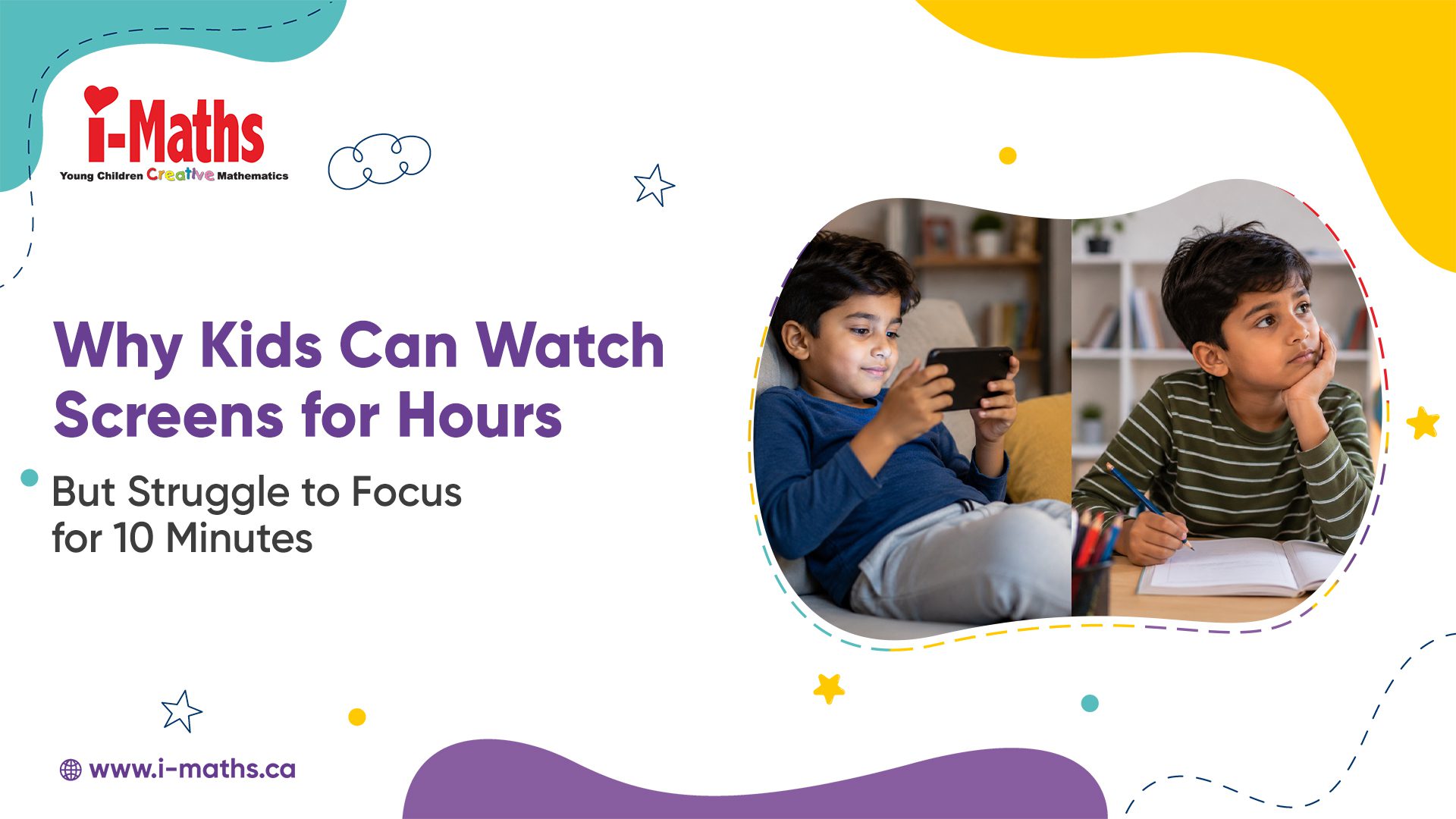
Many parents today notice the same pattern. Their child can spend an hour watching videos or switching between apps, but struggles to focus during reading, learning, or simple conversations.
That’s why questions like why kids can’t focus today are becoming increasingly common among parents and educators.
The truth is, attention isn’t something children are born with fully developed. It is a skill that grows through environment, habits, repetition, and the kind of stimulation children experience every day.
At i-Maths, educators work closely with young learners to build concentration, memory, and cognitive strength through structured hands-on learning experiences that support healthy brain development from an early age.
The good news?
A child’s focus can absolutely improve — when the brain is given the right kind of training.
Why Are Attention Spans Getting Shorter in Kids?
- Fast scene changes
- Bright visuals
- Instant gratification
- Continuous scrolling
- Rapid feedback loops
The Preschool Brain Is Still Developing
- Patience
- Deep focus
- Observation
- Listening
- Problem-solving
- Sequential thinking
Signs Your Child May Be Struggling With Attention
- Leave activities unfinished
- Struggle to sit through instructions
- Switch tasks constantly
- Become restless during learning
- Need constant stimulation
- Get frustrated quickly during problem-solving
- Lose interest within minutes
How Screens Change the Way Kids Process Attention
- New videos
- New sounds
- New animations
- Instant entertainment
- Reading
- Counting
- Listening
- Writing
- Puzzle-solving
- Classroom activities
Can Attention Span Be Improved?
- Longer focus periods
- Delayed gratification
- Problem-solving
- Listening carefully
- Completing tasks independently
Activities That Naturally Build Focus in Children
Children strengthen concentration when they engage in activities requiring active participation instead of passive consumption.
Some highly effective activities to build focus in children include:
1. Counting and Pattern Activities
Activities involving numbers, sequencing, and observation help train sustained mental attention.
Structured counting exercises especially support working memory and processing skills in young learners.
The article Why Counting Activities Boost Preschool Brain Development explains how simple number-based learning strengthens multiple cognitive functions simultaneously.
2. Puzzle Solving
- Stay engaged longer
- Observe carefully
- Practice patience
- Work toward completion
3. Story Listening
- “What do you think will happen next?”
- “Why did the character do that?”
- “Can you remember what happened earlier?”
4. Hands-On Learning Activities
Children focus better when learning involves movement, touch, interaction, and visual engagement.
This is one reason structured learning systems become highly effective during preschool years.
The i-Maths Teaching Method, engages children with learning through activity-based approaches that encourage concentration, participation, and cognitive development naturally.
Simple Preschool Attention Span Tips for Parents
Parents do not need extreme routines to improve focus. Small daily changes often create the biggest impact.
Here are practical preschool attention span tips for parents:
- Create Device-Free Learning Time: Even 20–30 minutes daily without screens helps the brain practice slower thinking.
- Reduce Background Noise: Too much TV, mobile audio, or constant stimulation reduces attention quality.
- Keep Instructions Short: Young children process better when directions are simple and clear.
- Encourage Task Completion: Help children finish activities before moving to the next one.
- Prioritize Sleep: Poor sleep significantly affects concentration and emotional regulation.
- Allow Boredom Sometimes: Boredom encourages creativity, imagination, and independent thinking.

Concentration Games for 3–6 Year Olds
- Memory card games
- Sorting objects by color or size
- Building block challenges
- Simon Says
- Spot-the-difference games
- Shape matching
- Simple maze activities
- Sequencing games
- Observe carefully
- Follow instructions
- Sustain mental effort
- Improve working memory
Why Structured Learning Matters More Than Ever
- Predictable routines
- Interactive learning
- Brain-engaging tasks
- Guided concentration exercises
- Reduced overstimulation
- Patience
- Listening ability
- Task persistence
- Emotional regulation
- Cognitive flexibility
Building Focus Is a Long-Term Process
Parents often expect immediate changes.
But attention develops gradually.
Just like physical fitness improves with regular exercise, focus improves with repeated mental practice.
Some days children will concentrate well. Other days they won’t.
Consistency matters more than perfection.
The goal is not raising children who sit silently for hours.
The goal is raising children who can:
- Think independently
- Stay engaged
- Solve problems patiently
- Handle learning challenges confidently
And those skills become increasingly valuable in a world filled with distractions.
Helping Kids Focus in a Distracted World
Children today are not necessarily less intelligent than previous generations.
They are simply growing up in environments filled with more stimulation than ever before.
The encouraging part is this: Young brains remain highly adaptable.
With the right environment, routines, and learning experiences, children can absolutely strengthen concentration, memory, and attention naturally.
At i-Maths, the focus goes beyond academics. The goal is helping children build strong cognitive foundations that support lifelong learning, confidence, and independent thinking.
If you want your child to develop stronger concentration, learning confidence, and cognitive skills through structured hands-on learning, now is the perfect time to begin.
Book an i-Maths Free Trial Class and discover how early brain-building activities can help children thrive in today’s distraction-filled world.
FAQs:
Children today are exposed to much higher levels of stimulation through screens, fast-paced content, and constant digital interaction. This can make slower activities like reading, listening, and problem-solving feel less engaging to the brain over time.
Experts generally recommend limiting recreational screen time for preschoolers and balancing it with active play, interaction, and hands-on learning. Excessive screen exposure may affect sleep, attention, and emotional regulation.
Activities like puzzles, storytelling, counting exercises, sorting games, block building, and memory games are excellent for improving concentration. Structured learning activities also help strengthen attention gradually.
Yes, young children naturally have shorter attention spans compared to older kids. However, if a child consistently struggles to complete basic activities or focus during interaction, parents can help improve attention through healthy routines and focus-building exercises.
Fast-paced digital content trains the brain to expect constant stimulation and quick rewards. Over time, this can make slower learning activities feel difficult or less interesting for children.
Yes. Structured learning helps children practice listening, problem-solving, sequencing, and task completion in a guided environment. These repeated experiences gradually strengthen concentration skills.
Simple activities like stacking blocks, matching shapes, memory games, storytelling, and sensory play work very well for toddlers. The key is keeping activities interactive and age-appropriate.
Attention span varies by age and personality. Many preschoolers can focus for around 10–20 minutes on engaging activities, especially when learning is interactive and enjoyable.