
If you’re a parent today, you’ve probably noticed two growing concerns—increasing screen time and decreasing attention spans in young children. It’s not uncommon to see preschoolers glued to devices, yet struggling with basic focus, memory, or even simple number recognition.
The question many parents are asking is: How do we build strong learning foundations early—without overwhelming kids?
The answer lies in something surprisingly simple: counting activities.
Platforms like i-Maths emphasize structured yet playful learning approaches that strengthen early math skills while keeping children engaged—without relying on screens.
Snippet Answer
Simple counting activities for preschoolers boost cognitive development by improving memory, focus, number recognition, and problem-solving skills through play-based learning experiences.
Why Counting Is Important in Early Year
Counting is often seen as a basic skill—but in reality, it is the foundation of all future mathematical thinking.
When children engage in counting activities for preschoolers, they are not just learning numbers—they are learning how the world works in patterns, sequences, and relationships.
Here’s why counting matters so much:
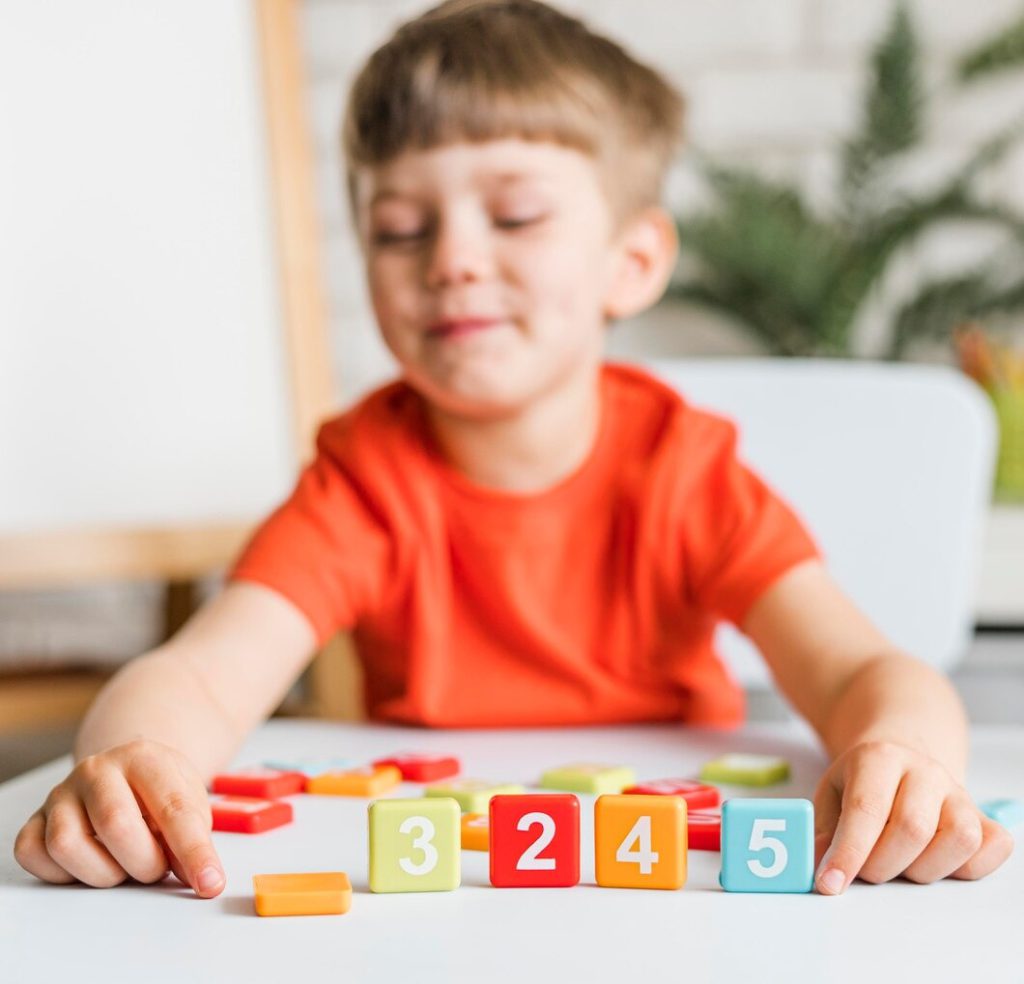
- It builds number recognition, helping kids identify and understand numbers visually and conceptually
- It strengthens early math skills, which later support addition, subtraction, and logical reasoning
- It introduces the concept of order and sequence, which is critical for structured thinking
- It boosts confidence by allowing children to solve small, achievable challenges
Think of counting as the “ABCs” of mathematics. Without it, everything that comes later feels confusing and overwhelming.
How Counting Builds Brain Skills
This is where things get interesting.
Counting isn’t just about numbers—it directly impacts brain development in kids.
When children participate in simple math activities for kids, multiple areas of the brain are activated simultaneously. This leads to stronger neural connections and improved cognitive abilities.
Here’s how counting supports brain growth:
- Memory Development: Repeating numbers helps children retain and recall information, strengthening working memory.
- Attention & Focus: Counting requires concentration, especially when done through engaging tasks like games or object sorting.
- Problem-Solving Skills: Even basic counting introduces children to patterns and relationships—key components of logical thinking.
- Cognitive Skills Enhancement: Activities like grouping, comparing, and sequencing numbers improve overall cognitive skills.
- Language & Communication: When kids count aloud, they connect numbers with language, improving verbal development as well.
This is why experts strongly advocate learning through play—because playful counting activities activate both emotional engagement and intellectual growth.
5 Simple Counting Activities for Preschoolers (With Steps)
You don’t need expensive tools or complex worksheets. The best preschool counting games are often the simplest—and the most effective.
1. Count Everyday Objects
Steps:
- Ask your child to count items around them (toys, fruits, books)
- Start with small numbers (1–5), then gradually increase
- Encourage pointing to each object while counting
Why it works:
It builds number recognition and connects numbers to real-world objects.
2. Clap and Count
Steps:
- Clap your hands a certain number of times
- Ask your child to count along
- Reverse roles—let them clap and you count
Why it works:
This activity improves focus and auditory learning, strengthening brain connections.
3. Number Hunt Game
Steps:
- Hide number cards around the house
- Ask your child to find them in order
- Say each number aloud when found
Why it works:
Combines movement with learning—boosting brain development in kids through active engagement.
4. Snack Counting Time
Steps:
- Give your child small snacks (like grapes or nuts)
- Ask them to count before eating
- Add simple questions: “If you eat one, how many are left?”
Why it works:
Introduces early problem-solving while keeping the activity fun.
5. Build and Count
Steps:
- Use blocks or LEGO pieces
- Ask your child to build towers with a specific number
- Compare towers (which is bigger/smaller?)
Why it works:
Enhances early math skills and introduces comparison concepts.
Mistakes Parents Should Avoid
While counting activities are simple, a few common mistakes can limit their effectiveness.
1. Pushing Too Hard, Too Early
Children learn best at their own pace. Forcing numbers beyond their comfort level can create resistance.
2. Making Learning Feel Like a Task
If it feels like homework, kids lose interest. Always keep learning through play at the center.
3. Ignoring Consistency
Doing activities occasionally won’t help much. Short, daily practice works better than long, irregular sessions.
4. Focusing Only on Memorization
Counting isn’t just reciting numbers—it’s about understanding quantity and relationships.
5. Over-Reliance on Screens
Apps can help, but they shouldn’t replace hands-on activities that build real cognitive skills.
How Structured Programs Improve Results
While home activities are powerful, structured learning programs can accelerate progress significantly.
Programs like those offered by i-Maths are designed to combine play, structure, and proven teaching techniques to enhance cognitive skills effectively.
For example:
- A well-designed kindergarten math program introduces numbers in a step-by-step manner
- An early enrichment program focuses on building foundational thinking skills beyond just counting
- A structured teaching method ensures children learn concepts deeply—not just superficially
Why structured programs work better:
- They follow a progressive learning path
- They combine visual, auditory, and hands-on techniques
- They are designed to improve focus, memory, and logical thinking
- They provide consistent reinforcement—something most home routines lack
The key difference is this:
- Home activities introduce concepts
- Structured programs strengthen and scale them
Building Strong Foundations Early Matters More Than You Think
The preschool years are not just about keeping children occupied—they are about shaping how they think, learn, and solve problems for life.
Simple counting activities for preschoolers may look small, but their impact is long-term:
- Better academic performance
- Stronger attention spans
- Improved problem-solving ability
- Higher confidence in learning environments
And most importantly, children begin to enjoy learning instead of fearing it.
If you’re looking to give your child a head start with the right balance of structure and fun, exploring programs like i-Maths can be a great next step.
Get in touch with us to learn more.
FAQs:
Simple activities like counting toys, snacks, or clapping rhythms work best because they combine fun with learning and improve number recognition naturally.
Children can begin learning basic counting as early as ages 2–3, gradually building early math skills through play-based activities.
Counting strengthens memory, focus, and problem-solving abilities, which are essential cognitive skills for overall brain development.
Short daily sessions of 10–15 minutes are more effective than long, irregular practice, as consistency helps reinforce learning.
Both are valuable—home activities introduce concepts, while structured programs provide a systematic approach to deepen understanding and improve results.