
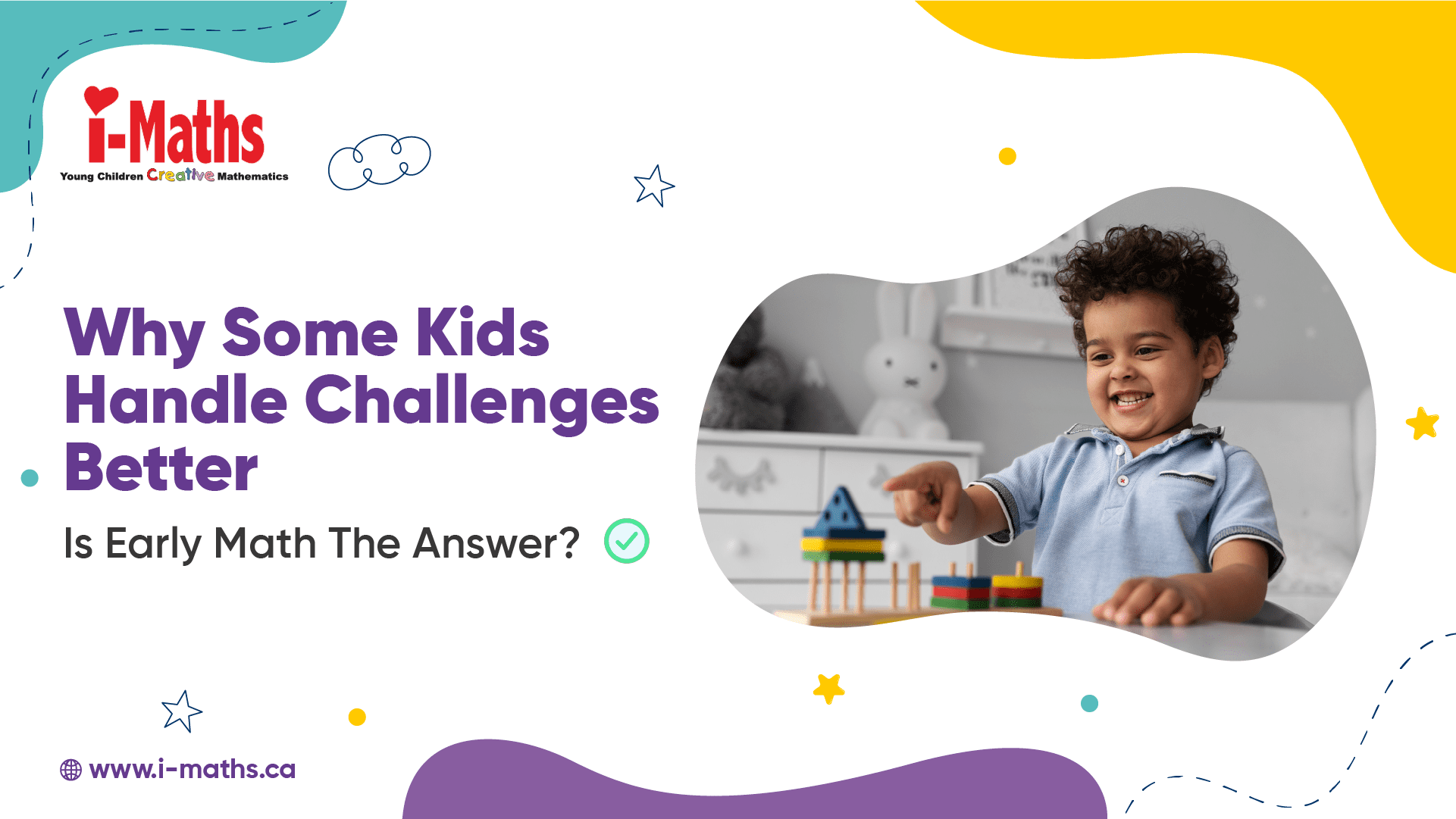
When parents hear “math,” they often picture numbers, worksheets, and calculations. But in the early years, math plays a much bigger role. Early math skills quietly shape how children think, reason, and approach challenges—long before grades or exams come into the picture.
From sorting toys to figuring out simple puzzles, math influences a child’s cognitive skills and ability to solve everyday problems. In this blog, we’ll explore how early math strengthens problem-solving, how it shows up in real life, simple activities parents can try at home, and how structured learning programs like i-Maths support this crucial stage of development.

The Cognitive Skills That Develop Through Early Math Exposure
Before children learn formulas, math quietly trains the brain to think better.
1. Logical Reasoning and Structured Thinking
Early math introduces children to patterns, sequences, and comparisons, which naturally develop logical reasoning. When children recognize order and relationships, they begin to understand how one idea connects to another. Over time, this structured thinking becomes the foundation for stronger problem-solving across subjects.
2. Working Memory and Mental Flexibility
Remembering steps, rules, or number sequences strengthens a child’s working memory. Early math activities also encourage flexibility, helping children adapt when a task changes or doesn’t go as planned. These cognitive skills support learning far beyond math, including language and reading comprehension.
3. Attention Span and Focus
Many early math tasks require children to stay engaged until completion. This gentle demand for focus helps improve attention span without pressure. As children persist through challenges, they learn that effort and concentration lead to results.
4. Cause-and-Effect Understanding
Math helps children see how actions lead to outcomes. Adding, removing, or rearranging objects teaches them that small changes can have noticeable effects. This cause-and-effect awareness strengthens reasoning and analytical thinking.
The Link Between Early Math and Strong Problem-Solving Skills
Problem-solving is not a talent—it’s a trained habit.
1. Breaking Big Problems into Smaller Steps
Early math naturally teaches children how to break tasks into smaller, manageable parts. Whether organizing objects or completing a sequence, children learn that complex problems become easier when tackled step by step. This approach builds confidence in problem-solving situations.
2. Trial, Error, and Strategy Building
Mistakes are an essential part of early math learning. Children experiment, observe outcomes, and adjust their strategies without fear. This process helps them understand that failure isn’t final—it’s simply part of learning how to solve problems effectively.

3. Decision-Making Under Constraints
Math introduces limits, such as quantities, rules, and boundaries. Working within these constraints helps children make thoughtful decisions. They begin to evaluate options, compare outcomes, and choose solutions that work best within given conditions.
4. Confidence in Facing New Challenges
Repeated exposure to achievable math challenges builds resilience. As children experience small successes, they become more willing to try unfamiliar tasks. This confidence carries over into academic and everyday situations.
How Early Math Shapes Real-World Thinking (Beyond the Classroom)
The strongest math lessons show up in everyday moments.
1. Planning and Time Management
Understanding sequences and order helps children plan their actions. Early math strengthens the ability to anticipate what comes next, which supports time management and organization. These early math skills later help children handle routines with greater independence.
2. Financial Awareness and Value Judgment
Math introduces basic ideas of quantity, comparison, and value from a young age. These early lessons influence how children assess choices and make decisions. Over time, this foundation supports smarter financial thinking and responsible decision-making.
3. Communication and Explanation Skills
Explaining how a solution was reached strengthens reasoning and language development. Math encourages children to articulate their thoughts clearly, reinforcing both communication and cognitive skills. This ability to explain ideas boosts confidence and understanding.

Simple Early Math Activities That Strengthen Problem-Solving
Everyday play can quietly build powerful thinking skills.
1. Pattern Games and Sorting Activities
Sorting and pattern recognition help children identify relationships and differences. These activities sharpen observation and logical thinking while feeling like play rather than formal learning. They subtly reinforce early math skills through repetition.
2. Number Games in Daily Routines
Counting objects during everyday activities helps children develop number sense naturally. When math is part of daily life, it feels relevant and approachable. This consistency strengthens familiarity and confidence with numbers.
3. Puzzle-Based and Hands-On Activities
Hands-on play encourages children to think spatially and creatively. When something doesn’t work, they learn to adjust and try again. These moments build persistence and effective problem-solving habits.
4. Question-Based Math Conversations
Asking open-ended questions encourages children to think critically. Predicting outcomes and explaining reasoning turns ordinary moments into valuable learning opportunities. These conversations deepen understanding and curiosity.
How i-Maths Nurtures Strong Problem-Solving Thinkers
i-Maths is designed to train the brain, not just teach numbers.
Focus on Thinking Skills, Not Memorization
i-Maths emphasizes understanding over rote learning. Children are encouraged to reason, analyze, and apply concepts rather than memorize answers. This approach strengthens cognitive skills that support long-term learning.
Age-Appropriate, Brain-Friendly Learning Methods
Lessons are structured around how young brains learn best—through engagement, repetition, and gradual progression. This ensures children stay motivated while building a strong foundation in early math skills.
Building Confidence Through Small Wins
Progressive learning allows children to experience success at every stage. These small achievements reduce anxiety and encourage consistent effort. Confidence grows naturally through mastery rather than pressure.
Real-Life Application of Math Concepts
Math concepts are connected to everyday situations, helping children see relevance and purpose in what they’re learning. When math is taught in ways that align with how young brains process information, learning feels meaningful rather than abstract. This approach is grounded in the science behind how children learn math, which explains why concept-based, experiential learning leads to deeper understanding and long-term retention.
Early Math Today, Smarter Problem-Solvers Tomorrow
Early math is not just preparation for school—it’s preparation for life. By strengthening early math skills, children develop sharper reasoning, stronger cognitive skills, and the confidence to handle challenges thoughtfully. These abilities shape how children think, decide, and grow well beyond the classroom.
With the right guidance, math becomes a tool for empowerment rather than frustration. If you want to support your child’s journey toward confident thinking and strong problem-solving abilities, i-Maths offers a structured, brain-friendly approach designed for lasting impact.
Give your child the advantage of strong thinking skills early on. Take the next step and enroll with i-Maths today.
Early math skills help children develop logical thinking, focus, and decision-making abilities that support learning across all subjects—not just math.
Early math teaches children how to break challenges into steps, test solutions, and adapt their thinking, which strengthens everyday problem-solving.
Children can begin developing foundational math concepts as early as ages 3–4 through play-based, age-appropriate activities.
Yes, math directly supports cognitive skills like memory, attention, and reasoning, which are essential for academic and real-world success.
Early math focuses on understanding concepts and thinking processes rather than memorization or speed, making learning more meaningful and stress-free.
Structured programs provide guided progression and consistency, ensuring children build strong early math skills while developing confidence and problem-solving habits.